Use of Natural Gas Helps Boost Business Efficiency for Residents of Borobudur
Magelang – The use of the natural gas network (jargas) operated by PT Perusahaan Gas Negara (Persero) Tbk (PGN), a Pertamina gas subholding, is helping micro, small and medium-sized enterprises (MSMEs) in Karangrejo Village, Borobudur Sub-district, Magelang Regency, Central Java, to reduce their operating costs. These energy cost savings provide business owners with the scope to optimise production activities and improve the quality of service to customers.
These benefits have been felt by a number of businesses, ranging from the accommodation sector to the food and beverage sector. One such example is Jogan Gumelar Homestay. The business owner, Sri Irniati, said that using PGN’s jargas helps to save on energy expenditure for cooking and catering services.
With an average cost of around Rp400,000 per month, these expenses are considered more economical compared to the estimated cost of up to Rp1 million if using bottled gas.
“I am indeed one of the customers who makes extensive use of PGN’s piped gas. When you do the maths, it’s far more economical than using bottled gas,” explained Neni, as she is affectionately known.
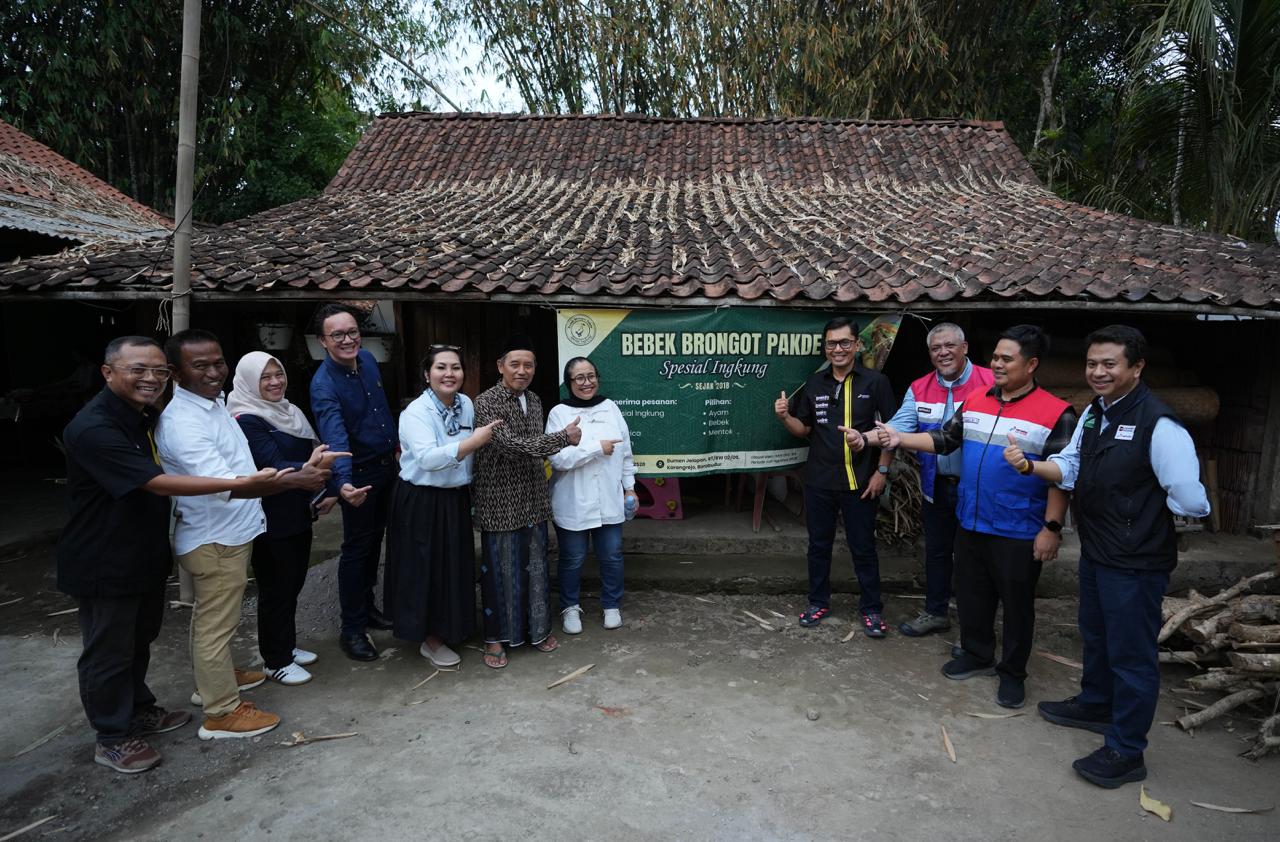
Muhammad Hasyim, owner of the Bebek Brongot food business in Bumen Jelapan hamlet, Karangrejo village, has experienced similar savings. Since becoming a PGN piped gas customer in 2021, his energy costs for cooking have fallen from the previous Rp150,000–Rp200,000 to around Rp100,000 per month.
“Before using the piped gas network, I used to spend between Rp150,000 and Rp200,000 a month on bottled gas. Now, it’s only around Rp100,000. It’s more economical and less of a hassle,” said Hasyim.
Savings on energy costs are a key factor in ensuring the business’s sustainability, particularly when demand rises during the holiday season. In addition to more affordable costs, the use of piped gas also offers convenience as business owners do not need to purchase and replace gas cylinders on a regular basis.
Business activities such as homestays and catering are also closely linked to the local economy. The demand for foodstuffs, local agricultural produce and labour creates opportunities for residents to participate in the village’s economic activities.
Support for the use of natural gas in these community-led productive activities was also a key focus of the visit by PT Pertamina (Persero) Commissioner Nanik Sudaryati Deyang and Pertamina Independent Commissioner Raden Adjeng Sondaryani to the PGN Karangrejo Village Development Centre on Friday (6 November 2026). During the visit, the development of a natural gas network integrated with community economic activities was one of the matters reviewed.
PGN continues to promote the use of natural gas to support the community’s productive activities. Through its social and environmental responsibility (TJSL) programme, PGN also strives to optimise local economic potential by taking into account community needs and business development opportunities in the areas under its supervision.
About PGN
PT Perusahaan Gas Negara (Persero) Tbk (PGN) is Pertamina's Gas Subholding, operating in the transmission and distribution of natural gas, as well as the development of integrated natural gas infrastructure and services in Indonesia. PGN manages over 95% of the country's downstream natural gas infrastructure to support Indonesia's energy security and energy transition. PGN also controls over 90% of the commercial natural gas market in Indonesia.
Disclaimer:
This press release contains forward looking statements based on the Company's current data and expectations, which involve a number of risks, uncertainties, and assumptions. Factors that may cause actual results to differ materially include industry conditions, fluctuations in crude oil and gas prices, the Company's ability to obtain and execute new projects, and competitive dynamics. Should one or more of these risks or uncertainties occur, or should the underlying assumptions prove inaccurate, the actual results may differ materially from those stated or anticipated.