

Greener Future
PGN demonstrates a strong commitment to minimize the negative environmental impacts of its operations through the Health, Safety, Security, and Environment (HSSE) policy, approved by the President Director in June 2024. This policy prioritizes prevention, risk management, regulatory compliance, environmental protection, and continuous improvement. PGN also consistently adheres to legislation and HSSE standards in all its activities as a form of responsibility to stakeholders.
As the Gas Subholding, PGN plays a crucial role in supporting the government's policy for clean energy, emission reduction in the energy sector by 2035, and achieving net zero-emission target by 2060. PGN actively contributes to the development of a sustainable national economy and the transition to low carbon energy use, as an effort to address the challenges of global climate change.
On October 6, 2022, PGN, as the Subholding Gas of PT Pertamina (Persero), along with other Subholdings, declared its commitment to achieve the Net Zero Emission (NZE) target aligned with the national goal by 2060, or sooner if possible. As a follow-up, PGN developed and outlined an inclusive NZE roadmap, focusing on decarbonization and the development of clean and green energy-oriented businesses.
Here are PGN's strategic steps toward NZE:
Optimization of Natural Gas as Transition
Development of Low Carbon and Renewable Energy
Digitalization and Operational Efficiency
Infrastructure Development and Market Expansion
Sustainability Governance and ESG Integration
To support environmental management and conservation in achieving sustainability, Gas Subholding allocates a dedicated budget for environmental initiatives each year. In 2024, Gas Subholding realized an environmental management and conservation expenditure of Rp19.79 billion. Gas Subholding successfully met its 2024 environmental targets while utilizing only 92% of the total planned budget, resulting in cost savings of Rp1.7 billion-a more efficient outcome compared to 2023. This efficiency aligns with the optimization of natural gas infrastructure to support sustainable energy policies, further driving increased investment in environmental management.
Since 2016, Gas Subholding has adopted an environmental management system based on ISO 14001:2015 and has successfully maintained this certification. In 2024, the scope of this system's implementation reached 100%of Gas Subholding operational locations through certification and recertification audits conducted by an independent agency.
PGN routinely conducts monitoring and evaluation to assess the effectiveness of environmental management, covering aspects such as materials, water, emissions, and waste. The results of these monitoring and evaluations are used as a basis for continuous improvement actions in environmental management.
More Information →
The Company recognizes that climate change can impact the environment as well as its operational and production activities in the future. In response, the company continuously conducts internal risk analyses that may arise and takes the necessary mitigation steps. To assess the environmental risks associated with climate change, PGN is committed to addressing the challenges of climate change by referring to: Risk Management Guidelines Risk Management Charter and resilience PGN HSSE Policy HSSE Risk Management Guidelines PGN has adopted various methods to manage risks or opportunities related to climate change, including: Emission Reduction through Energy Efficiency Programs Greening Programs to preserve ecosystems and reduce CO2 concentrations in the atmosphere Development of Infiltration Wells and Biopore Holes to absorb rainwater into the soil, reduce surface water flow, and minimize flood risks
(P-001/27.00/2023)
(P-004/A018)
More Information →
PGN does not require water in carrying gas distribution and transmission activities. However, water is used in small quantities for maintenance purposes, such as cleaning pipes, equipment, and other infrastructure. Additionally, water is used for domestic needs at the head office and operational support facilities of PGN, so that water withdrawal and consumption data show relatively similar values. Although the use of water for maintenance is limited, PGN still prioritizes water use efficiency and ensures that its activities do not have a negative impact on the environment. PGN has implemented various initiatives to apply the 4R principles (Reduce, Reuse, Recycle, Recover) to improve the quality of wastewater disposal, including: Recycling used water from wastewater treatment plants (WWTP) for reuse at several operational locations, including SOR I and the Pagardewa Compressor Station Plakofit Filter Installation Program and Domestic Wastewater Path Modification (PT Pertamina Gas) Utilization of HVAC Makeup Water Distillate in Amine Regeneration System (PT Saka Energi Indonesia) PGN also regularly monitors and measures effluent quality: Effluent is tested at the Wastewater Treatment Plant (WWTP) to ensure it meets quality standards. Testing results are reported every three months to environmental monitoring agencies through the SIMPEL application
PGN ensures that water usage remains efficient and does not negatively impact environmental quality. Water efficiency initiatives that have been carried out include:
Repair of Damaged Water Facilities, Water Monitoring and Rainwater Utilization
Use of Sprayers on Ablution Taps
Automated Watering System for Mushroom Cultivation in the Taman Sidrap Community Development Program
Installation of Palkofit Filters and Modification of Domestic Wastewater Channels to Supply Freshwater Fish Farming Ponds in the CSR Cambai Program
Smart Temperature Controller for Compressed Air Cooling at SKG Bitung
Recycling of Backwash Water at UWTP
Installation of Single - Flush Toilets
No Shampoo and Water - Gas Leak Detection System
Utilization of HVAC Makeup Water Distillate in the Amine Regeneration System
More Information →
PGN's is continuously improving energy efficiency while supporting the sustainability of the company's operations. In 2024, the total energy consumption for the distribution of natural gas reached 1,456,924.09 GJ. The energy intensity in 2024 was 2,22 GJ/MMSCF, which decreased by 14% compared to the energy consumption intensity in 2023. As part of energy conservation initiatives, PGN has started utilizing renewable energy by installing solar panel systems at several gas distribution and transmission stations, as well as office areas.
PGN has consistently implemented energy efficiency initiatives in recent years through various measures, such as: Replacing Pneumatic Gas Starters with Electric Motor Starter Adjusting the operational patterns of Gas Turbine Compressors Improving rotors to increase Gas Turbine Compressor throughput capacity Installing soft starters on after coolers Optimizing the use of generators Using energy-efficient air conditioners Installing energy-efficient LED lights Installing window film to reduce air conditioning use Raising worker awareness about energy efficiency
Energy management is carried out through energy audits with the following objectives:
To assess energy consumption levels
To identify energy-saving opportunities
To develop phased steps to maximize the use of green energy
To raise awareness and understanding among Subholding Gas officers about the importance of energy conservation
More Information →
The scope 1 and 2 emissions intensity of PGN Subholding Gasin 2024 is 177.20 tonsCO2 eq/million USD, and the scope 3 emissions intensity is 5,403.57 tonsCO2eq/million USD. In the medium and long term, PGN Subholding Gas is committed to reducing the scope 3 emission intensity to achieve the maximum global warming rate target of 1.5oC compared to before the industrial revolution era. Emission reduction effort through energy efficiency effort were implemented with these programs: Installation of VSD (Variable Speed Drive) Coil Replacement on Regeneration Gas Heater (RGH) at Offshore Pangkah Facility (OPF) Electric Motor Starter for Gas Turbine Compressor (GTC) at Offshore Pangkah Facility (OPF) Regeneration Molsieve Sequence at OPF Solar Flood Light at West Pangkah Effectiveness of GTCP Operating Patterns on Exhaust Emissions & Gas Turbine Compressor Performance Improvement through Rotor Refurbishment Optimization of Fuel Gas Usage from 3 Power Generators to 2 Power Generators Solar Panels at Offices, Offtake Gas Station Bojonegara, Muara Bekasi, and Porong
PGN's operations generate significant non-GHG emissions from the combustion of fuel in turbines and generator engines. To ensure that the emissions do not affect air quality, emissions from the combustion chimneys (stationary sources) are monitored and measured.
More Information →
Category 2: Capital Goods
Category 3: Fuel and Energy Related Activites

Category 5: Waste Generated in Operation

Category 6: Business Travel (Flights)

Kategori 7: Employee Commuting

Category 9: Downstream Transportation and Distribution

Category 10: Processing of Sold Products

Category 11: Use of Sold Products
Waste management is carried out through various methods, such as reduction, recycling, reuse, or responsible disposal. Based on its nature, PGN generates two types of waste: hazardous and toxic waste and non-hazardous waste. PGN has procedures related to the management of hazardous and non-hazardous waste, including monitoring and evaluation of such waste, which refers to the Hazardous and Toxic Material (B3) and Waste of Hazardous and Toxic Material (LB3) Management Guideline document (G-002/19.02/2023) and the Waste Management Guideline document (PDN-HSSE-EM-003). PGN's commitment to managing hazardous waste is reflected in its HSSE Policy, which prioritizes pollution prevention through the application of the 4R principles: reduce,reuse, recycle, and recover. This is realized through: Improving the quality of wastewater disposal Handling hazardous and non-hazardous waste Promoting the use of environmentally friendly materials Efficient use of natural resources Preventing oil spills
In 2024, non-hazardous waste (non-B3) generation significantly decreased to only 37% of the total non-B3 waste generated in2023. This achievement demonstrates the success of implementing the 4R principles across all Subholding Gas operational locations. PGN's initiatives in applying the 4R principles for non-hazardous waste include:
e-LAPBUL (Monthly Report) HSSE and E-Report WWTP
Maggot Cultivation
Use of Tumblers, Dispensers, and Reusable Containers for Catering
Composting
More Information →
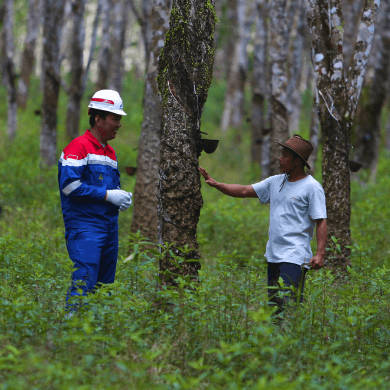
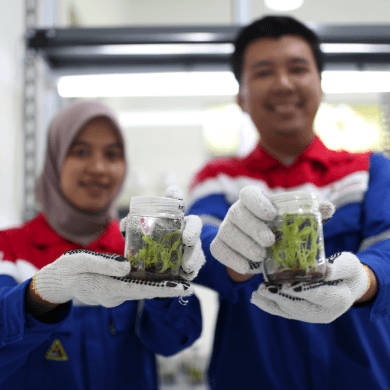
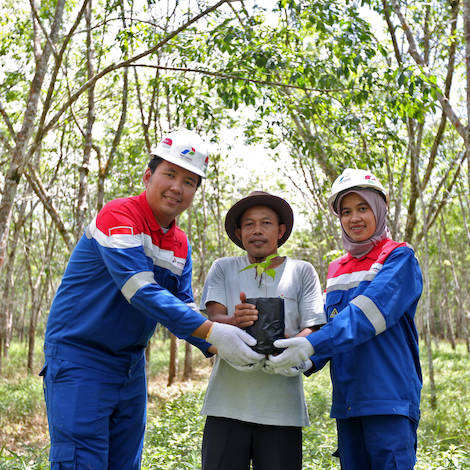
PGN conducts biodiversity conservation assessments through the Biodiversity Action Plan(BAP) process, following a hierarchical approach based on references from the International Union for Conservation of Nature (IUCN). This approach is outlined in the Guidelines for Developing a Biodiversity Action Plan (BAP) to Achieve Net Positive Impact (NPI), Document No. A04-008/S00000/2022-S9. The BAP is designed to protect and manage biodiversity within a specific area or ecosystem. PGN demonstrates its dedication to environmental and biodiversity conservation through internal initiatives and external programs. These programs are part of its corporate social and environmental responsibility efforts, as regulated under Minister of State-Owned Enterprises Regulation No. PER 05/MBU/04/2021 on Corporate Social and Environmental Responsibility Programs for State-Owned Enterprises. PGN also ensures the fulfillment of its No Net Loss (NNL) target by monitoring the biodiversity index (Shannon-Wiener Index) across all critical locations. PGN also runs external environmental conservation programs as part of its corporate social and environmental responsibility Key activities in the program include: Mangrove planting in Lampung Development of the Bedegung Biodiversity Park in Muara Enim Regency Development of the Pagardewa Arboretum in Muara Enim Regency Tree planting at Lake Kemiri Pagardewa Conservation of endemic flora and fauna "SIRANA" Monitoring mangrove ecosystems at Landfall KP 00 and ORF Monitoring biodiversity in fish apartments and Biorock coral reefs in Pagerungan Besar Conservation of native Indonesian orchids using an automatic watering system Conservation of Bontang Mangrove Park in Kutai National Park Breeding of Delimukan birds (Gallicolumba sp.), Bluewinged Leafbird of Sumatra (Chloropsis moluccensis), Black-crowned Bulbul (Pycnonotuszeylanicus), Sumatran Ampis Drongo (Caloramphus hayii), and Small Leaf Leafbird(Chloropsis cyanopogon) Landscaping in the conservation area of the Kehati Park
More Information →