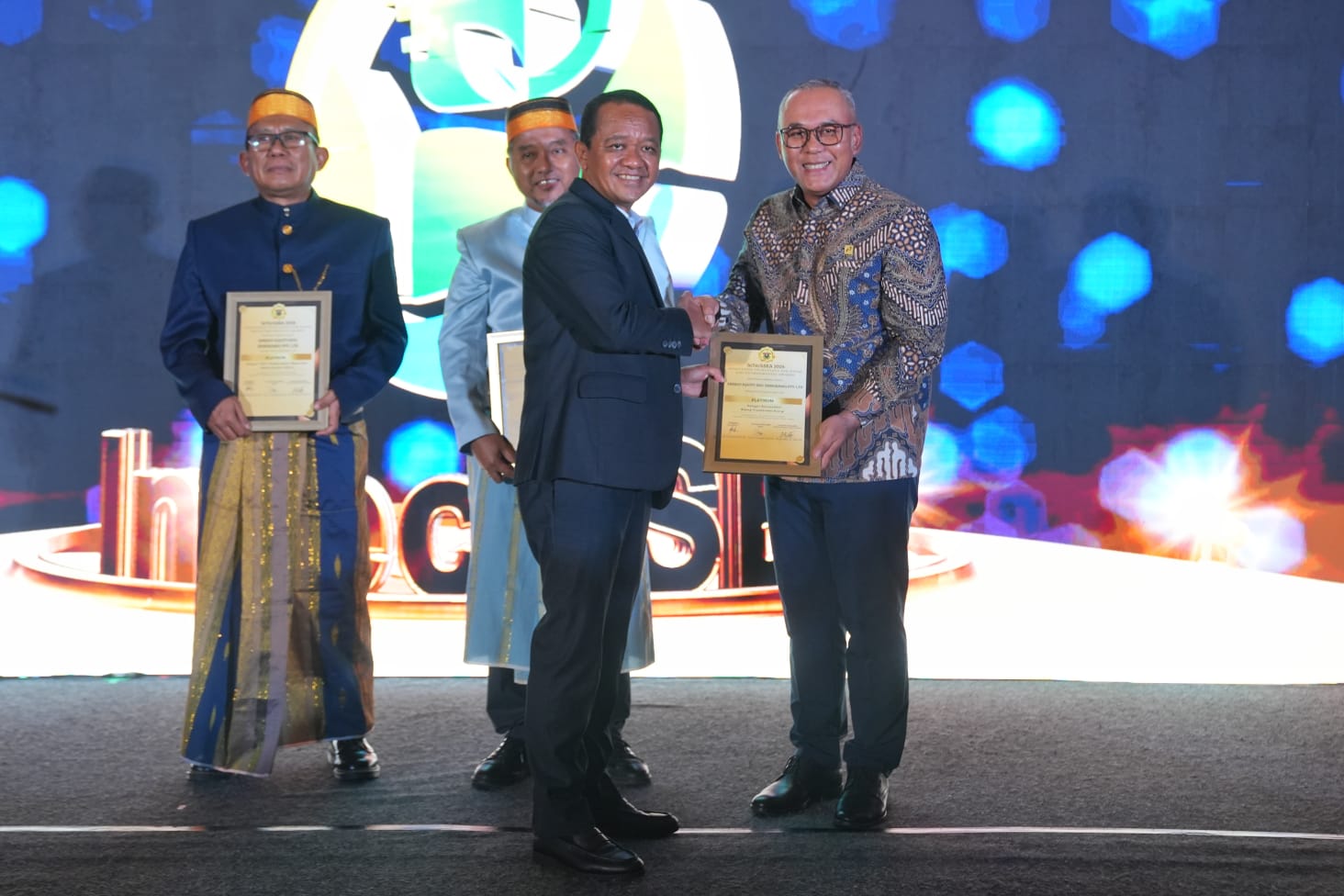
Strengthening Innovation in the Energy Transition, PGN Wins the InTechSEA 2026 Platinum Award
Jakarta – PT Perusahaan Gas Negara (Persero) Tbk (PGN), as Pertamina’s Gas Subholding, has won the Platinum Award at the 2026 Innovation Technology for Social and Environmental Awards (InTechSEA), in the Environment category under the Energy Transformation sector. This award recognises PGN’s efforts in developing technology-based innovations and solutions that support the energy transition whilst delivering measurable impacts on the environment and business sustainability.
The award was presented by the Minister of Energy and Mineral Resources (ESDM), Bahlil Lahadalia, at the InTechSEA Awards 2026, organised by Hasanuddin University in Jakarta on Monday (14 September 2026). Under the theme “Collaborative Innovation for a Sustainable and Inclusive Future”, the event encourages the development of technological innovations that deliver tangible benefits to society and the environment.
One manifestation of PGN’s commitment to supporting the energy transition is the implementation of 37 decarbonisation initiatives across various company entities. These initiatives have contributed to a reduction in emissions estimated at approximately 22,000 tonnes of CO₂ equivalent (CO₂e) as of June 2026.
PGN’s Chief Executive, Arief K. Risdianto, stated that these achievements demonstrate that innovation and sustainability can go hand in hand with efforts to maintain operational reliability and create value for both the company and its customers.
“For PGN, innovation does not stop at technological development; it must be implemented and deliver tangible results. Our decarbonisation efforts demonstrate that environmental considerations can go hand in hand with operational efficiency and the creation of business value. This award serves as motivation for PGN to continue delivering innovations that are relevant to the needs of the industry, society and the progress of the energy transition,” said Arief.
As a company operating in the midstream and downstream natural gas sectors, PGN continues to strengthen the role of natural gas in supporting the transition towards a more sustainable energy system. These efforts are carried out through infrastructure development, improved connectivity, operational digitalisation, and the development of energy solutions tailored to customers’ characteristics and needs.
PGN currently meets the natural gas needs of various sectors, ranging from households, commercial and industrial sectors, power generation to land transport. Distribution is carried out via the natural gas pipeline network, as well as through the use of Compressed Natural Gas (CNG) and Liquefied Natural Gas (LNG) technologies to extend service coverage to areas not yet connected to the pipeline network.
To strengthen natural gas infrastructure connectivity, PGN is also optimising the utilisation of the Cirebon–Semarang (Cisem) Transmission Pipeline, FSRUs, LNG Hubs, and the development of other LNG infrastructure. This strengthening of connectivity is aimed at enhancing the flexibility and reliability of supply whilst optimising the utilisation of existing natural gas infrastructure.
In line with this, PGN is beginning to prepare its infrastructure to be increasingly adaptable to future energy source developments. One such initiative involves the development of injection points capable of supporting the distribution of gas from alternative energy sources such as Coal Bed Methane (CBM) and biomethane in South Sumatra.
“Energy transformation requires infrastructure that is increasingly integrated and adaptable. Therefore, PGN is not only strengthening existing infrastructure but also preparing it to accommodate an increasingly diverse range of energy sources. This step is crucial for enhancing supply flexibility whilst supporting national energy security in the long term,” explained Arief.
This transformation is also supported by digitalisation in the management of natural gas infrastructure. Among other things, PGN operates a Supervisory Control and Data Acquisition (SCADA) system to monitor, control and manage the natural gas network in real time from a distance. The integration of operational data through this system supports data-driven decision-making, operational efficiency and the reliability of natural gas supply to customers.
On the environmental front, PGN integrates climate change mitigation, environmental management, and safety and security aspects into the implementation of Health, Safety, Security and Environment (HSSE) across all the company’s operational activities.
PGN juga terus menjaga keandalan dan keselamatan infrastruktur gas bumi nasional, mulai dari jaringan pipa transmisi dan distribusi sepanjang lebih dari 33.000 kilometer hingga berbagai fasilitas CNG dan LNG. Infrastruktur tersebut menjadi bagian penting dalam mendukung distribusi energi ke berbagai sektor pelanggan sekaligus memperluas pemanfaatan gas bumi di berbagai wilayah.
“Upaya dekarbonisasi harus berjalan seiring dengan keandalan dan keselamatan operasional. Karena itu, PGN terus mendorong inovasi yang dapat menekan emisi dan meningkatkan efisiensi, dengan tetap memastikan seluruh infrastruktur dan layanan gas bumi beroperasi secara andal serta memenuhi standar keamanan dan keselamatan,” ujar Arief.
Ke depan, PGN akan terus memperkuat inovasi dan kolaborasi dengan berbagai pemangku kepentingan untuk mengembangkan pemanfaatan energi yang lebih berkelanjutan. Melalui optimalisasi infrastruktur, digitalisasi operasional, serta pengembangan solusi gas bumi dan sumber energi masa depan, PGN berkomitmen mendukung ketahanan energi nasional sekaligus menciptakan nilai tambah bagi masyarakat, pelanggan, lingkungan, dan keberlanjutan bisnis.
PGN also continues to maintain the reliability and safety of the national natural gas infrastructure, ranging from transmission and distribution pipeline networks spanning more than 33,000 kilometres to various CNG and LNG facilities. This infrastructure plays a vital role in supporting energy distribution to various customer sectors whilst expanding the use of natural gas across different regions.
“Decarbonisation efforts must go hand in hand with operational reliability and safety. Therefore, PGN continues to drive innovation that can reduce emissions and improve efficiency, whilst ensuring that all natural gas infrastructure and services operate reliably and meet safety and security standards,” said Arief.
Looking ahead, PGN will continue to strengthen innovation and collaboration with various stakeholders to develop more sustainable energy utilisation. Through infrastructure optimisation, operational digitalisation, and the development of natural gas solutions and future energy sources, PGN is committed to supporting national energy security whilst creating added value for the community, customers, the environment, and business sustainability.
About PGN
PT Perusahaan Gas Negara (Persero) Tbk (PGN) is Pertamina's Gas Subholding, operating in the transmission and distribution of natural gas, as well as the development of integrated natural gas infrastructure and services in Indonesia. PGN manages over 95% of the country's downstream natural gas infrastructure to support Indonesia's energy security and energy transition. PGN also controls over 90% of the commercial natural gas market in Indonesia.
Disclaimer:
This press release contains forward looking statements based on the Company's current data and expectations, which involve a number of risks, uncertainties, and assumptions. Factors that may cause actual results to differ materially include industry conditions, fluctuations in crude oil and gas prices, the Company's ability to obtain and execute new projects, and competitive dynamics. Should one or more of these risks or uncertainties occur, or should the underlying assumptions prove inaccurate, the actual results may differ materially from those stated or anticipated.