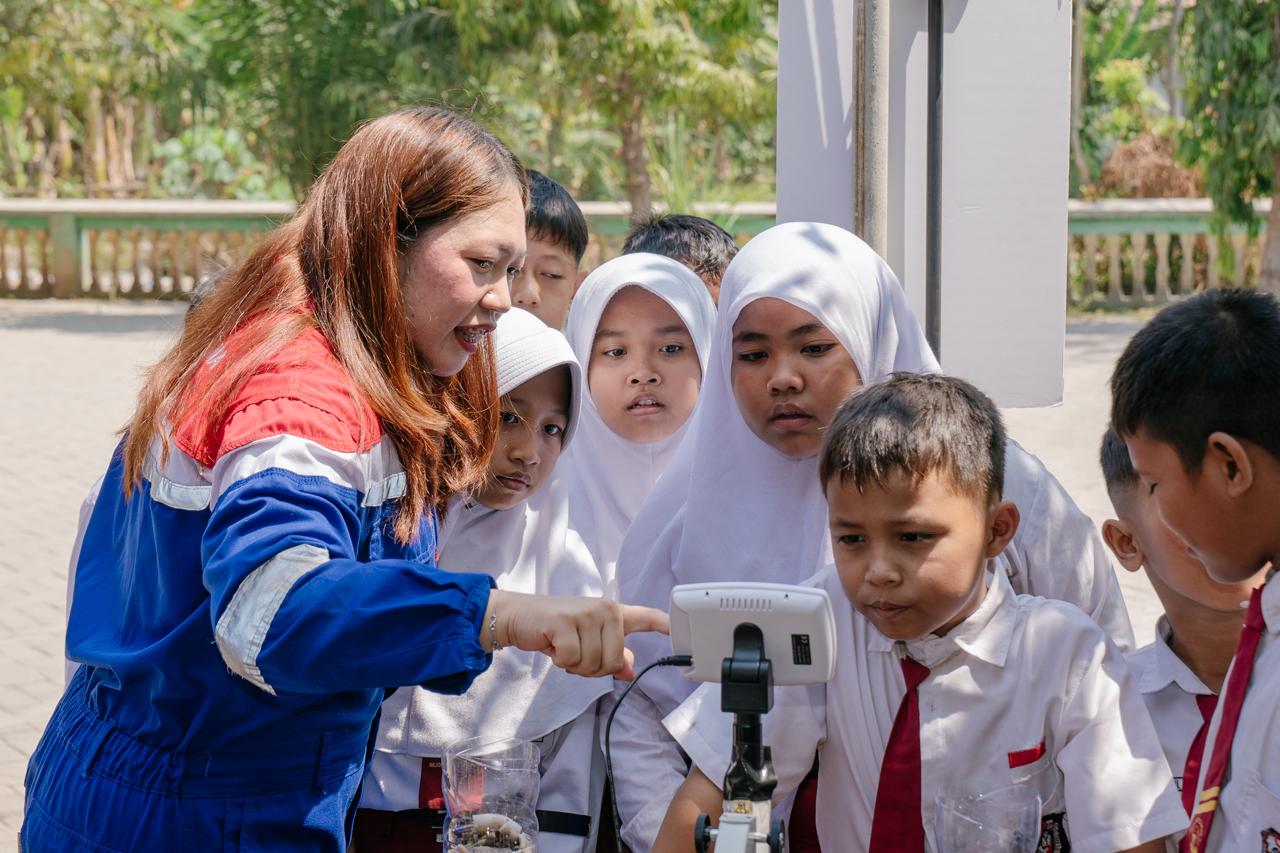
As part of its 61st anniversary celebrations, PGN expands its educational support to more than 1,300 pupils and teachers across 10 locations through the ‘Energi Mengajar Negeri’ programme
Jakarta – Support for education is not only provided through school facilities, but also through opportunities for children to learn, recognise their own potential, and draw inspiration from their surroundings. This is part of the 2026 ‘Energi Mengajar Negeri’ programme run by PT Perusahaan Gas Negara (Persero) Tbk (PGN), a Pertamina Gas Subholding, as part of its Social and Environmental Responsibility (TJSL) initiatives.
To mark its 61st anniversary, PGN involved 61 volunteers from various functions across the company to carry out educational activities at 10 locations in several regions of Indonesia. The programme, which began in Bangka Regency on 16 September 2026 and concluded in Banyuwangi on 26 October 2026, reached more than 1,300 beneficiaries, comprising pupils and teachers.
Through ‘Energi Mengajar Negeri’, the volunteers shared their knowledge and experience with primary school pupils, particularly in areas surrounding the company’s operational zones. The activities were designed to provide an interactive learning experience whilst encouraging children to become more confident, dream boldly, and develop their full potential.
The programme took place in Pangkalpinang, Cirebon, Karawang, Pasuruan, Pagar Dewa in Lampung, Kendal, Cilegon, and Banyuwangi. In Karawang, activities were held at two schools, bringing the total number of locations to 10.
PGN’s Corporate Secretary, Fajriyah Usman, stated that the involvement of volunteers is a vital part of the company’s efforts to make a contribution that is closer to the community. Through direct interaction with pupils, volunteers are expected to share their knowledge whilst motivating them to keep learning.
“Through ‘Energi Mengajar Negeri’, we aim to make a contribution that is closer to the community. The presence of volunteers is not only to share knowledge, but also to give children new experiences and motivation to keep learning, dream boldly, and develop their potential,” said Fajriyah.
In addition to organising learning activities with volunteers, PGN also provides support for educational needs at schools. The assistance is tailored to the conditions of each school to support teaching and learning activities and benefit both pupils and teachers.
This support includes learning facilities and aids, equipment for extracurricular and sporting activities, and school supplies for pupils. In implementing these initiatives, PGN also takes into account needs relating to accessibility and learning comfort, including mobility aids for pupils with disabilities.
“We understand that every school has different needs and challenges. Therefore, the support provided is tailored to on-the-ground conditions to help facilitate the teaching and learning process. We hope that these facilities can be utilised by schools and provide long-term benefits for both pupils and teachers,” said Fajriyah.
‘Energi Mengajar Negeri’ is one of PGN’s initiatives to support a better educational environment through employee involvement and support tailored to schools’ needs. Through this programme, the company hopes that children will gain meaningful learning experiences, whilst schools receive relevant support for their educational activities.
About PGN
PT Perusahaan Gas Negara (Persero) Tbk (PGN) is Pertamina's Gas Subholding, operating in the transmission and distribution of natural gas, as well as the development of integrated natural gas infrastructure and services in Indonesia. PGN manages over 95% of the country's downstream natural gas infrastructure to support Indonesia's energy security and energy transition. PGN also controls over 90% of the commercial natural gas market in Indonesia.
Disclaimer:
This press release contains forward looking statements based on the Company's current data and expectations, which involve a number of risks, uncertainties, and assumptions. Factors that may cause actual results to differ materially include industry conditions, fluctuations in crude oil and gas prices, the Company's ability to obtain and execute new projects, and competitive dynamics. Should one or more of these risks or uncertainties occur, or should the underlying assumptions prove inaccurate, the actual results may differ materially from those stated or anticipated.